
PANIC ZONES
This is one of the things that will get the most people killed in an initial outbreak and will cause the greatest spread of the undead across the globe, yet it would be so easy to stop if people just used their noggin for a moment. People won’t though. You know that and I know that. The general public is essentially stupid when it comes to times of crisis and will flood to their own reanimated death in these quarters of doom known as Panic Zones.
So what exactly are panic zones? There are several classifications that I will look into now. Avoid them at all costs.
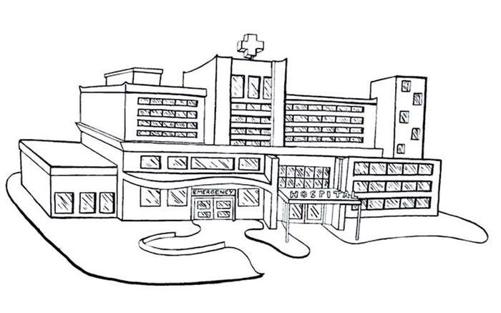
BEFORE:
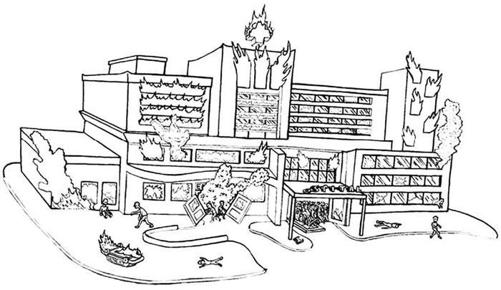
AFTER:
The Outbreak Zone
Hospitals are the prime example of this type of panic zone. At the first signs of an outbreak, those who are infected will rush themselves or their loved ones to hospital. The hospital staff won’t know what’s going on and neither will the patients. Then the patients will die, and in due course start to reanimate. The many sick and vulnerable people in the hospital will find it difficult to fight back so you will have a huge number of people all reanimated very quickly. And as more people arrive with no idea of what’s going on inside, the circle of death will continue.
The Answer Zone
When a crisis begins everyone thinks they’re a hero, but that doesn’t mean they grab a shovel and walk down the street smashing in the head of every corpse they see. No, that would be the sensible thing to do. They think that the way to be a hero is to march down to the nearest authority (police station, council office, army barracks) and demand answers. They’ll be shouting and bawling at those in power who could be doing a much more effective job if they didn’t have half the city’s population camped on their doorstep screaming and shouting about the ignominy of the situation rather than doing anything proactive about it. So there you have it. Crowds of people all in one place. All it takes is one zombie and the rest, as they say, is history.
The Escape Zone
Once the horror of the situation sinks in there will be a mad clamour to get out of infected areas. Airports, train stations, and ports will all be flooded with people wanting to get away as quickly as possible. And there will be extremely impractical people amongst them too. Those who see fit to take with them all their worldly goods including their clothes, television, washing machine and Ikea flat-pack house. During a zombie apocalypse so many people crammed into one place is once again setting the scene for a mass infection. The real stupidity of the situation is that the transport system in the UK is never very reliable at the best of times, so why would anyone assume it would be running at perfect capacity when there’s a crisis on?
MAIN ROADS
These are also classed as panic zones as those travelling by car will also clog up the primary exit routes from a city. Although not as dangerous as crowded areas, the long lines of cars filled with the living will be like a trail of breadcrumbs leading the undead to more victims – but ultimately clearing urban areas of larger hordes.
The Supply Zone
We need cheese! This may be the cry of the masses as they hear of a possible crisis. And not just cheese, but any form of dairy products, food, weapons, stationery, fuel and all manner of useless stuff. There is nothing the general public like more than panic-buying when a ‘situation’ occurs. Every year over the Christmas period shops are bled dry of every possible form of foodstuff because they are closed for a few days over the New Year period. So imagine the shopathon that will occur if the undead rise. It will be like Supermarket Sweep with bludgeoning weapons instead of Dale Winton (or Dale Winton being used as a bludgeoning weapon!). And although these panic zones will be filled with aggressive folks all trying to purchase what they believe is necessary that aggression will make them blind to their own safety – these areas will be easy pickings for a zombie intent on doing his own taste-testing.
The God Help Me Zone
When all else fails, turn to God. If the authorities and medical science can’t supply the answers then turn to the deity who is to blame and has the power to save us from everything. Even the non-religious find time for prayer when all else has failed, and houses of worship for all denominations will become overcrowded with over-emotional people seeking redemption and hope. The consolation is that in these areas religious buildings have always been built as sanctuaries and will likely be able to keep the undead out for a reasonable period of time – if the people within are sensible enough to keep the doors closed. However, it only takes one good Samaritan to let a victim who has been bitten into the building and the whole situation will go tits up (although you wouldn’t refer to the situation in that manner in a place of religious worship as tits is somewhat of an ungodly word).
Those who will have resorted to taking shelter in a church will also be at the stage of complete panic or complete resignation and are liable to be wailing and moaning. The noise is likely to attract the attention of the walking dead who, although they may not be able to get into the building, will make it pretty damn difficult for anyone to get out. Places of worship are not well known for stocking large quantities of food (unless wine and very thin slices of bread are favourites of yours) so eventually those inside will either starve to death or die attempting to get supplies.
In essence, a panic zone is a place that is overrun with the unprepared general public when the apocalypse is in its early stages. Anywhere that stupid people are liable to head should be avoided at all costs. As we all know, the first thing you should do is get inside and lie low (preferably on a higher floor in a secure building, but sometimes beggars can’t be choosers). Panic zones are not to be confused with ‘infection hotspots’. These are areas that are already crowded prior to anyone having knowledge of the apocalypse (e.g. music concerts, sporting events, lecture halls and theatres). Some of these could make excellent safe houses when abandoned but if they are full during an outbreak, can become infection hotspots. And what’s a hotspot not? I think we all know the answer to that one.