Blütenpflanzen

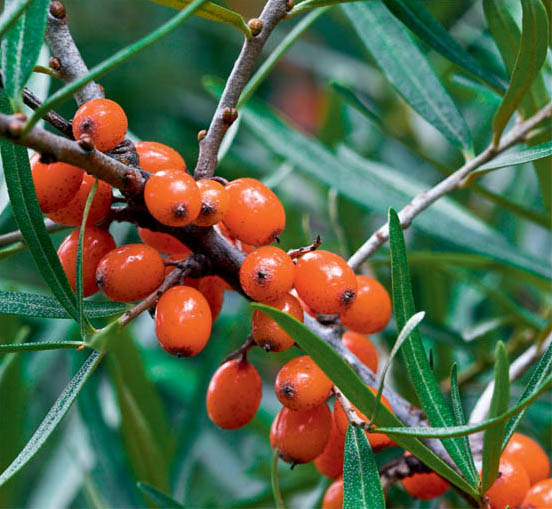
Sanddorn

Hippophae rhamnoides

image

> dorniger Strauch

> Früchte reich an Vitamin C

> in Dünengebieten

Merkmale Strauch oder kleiner Baum, bis zu 6 m hoch. Zweige mit kräftigen Dornen, junge Zweige silbergrau, ältere dunkel rotbraun. Blätter schmal-lanzettförmig, Oberseite graugrün, Unterseite silbrig weiß. Blüten unscheinbar in kurzen dichten Ähren, Früchte leuchtend orange. Mehrjährig, blüht von März bis Mai. Vorkommen Dünengebiete an Nord- und Ostseeküste, häufig auch angepflanzt. Wissenswertes Der Sanddorn ist windbeständig, erträgt salzhaltige Böden und hat ein weit und tief reichendes Wurzelsystem. Er wird daher zur Bodenbefestigung sandiger Standorte eingesetzt. Als Pionierpflanze baut der Sanddorn mithilfe von Pilzen, die mit ihm in Symbiose leben, langsam den Humusgehalt im Boden auf. Eine Sanddornhecke entwickelt dichtes Astwerk und dient zahlreichen Vögeln als Nistgehölz und Unterschlupf. Die Beeren des Sanddorns sind essbar und reich an Vitamin C. Sanddorn wird heute in einer breiten Produktpalette angeboten. Dazu gehören Marmeladen, Tees, Bonbons und Pralinen ebenso wie Körperpflegemittel.

Was lebt an Strand und Küste?: 142 Arten einfach bestimmen
cover.xml
contents.html
title.html
frontmatter.html
frontmatter2.html
chapter10-1.html
chapter10-2.html
chapter12-1.html
chapter12-2.html
chapter14-1.html
chapter14-2.html
chapter14-3.html
chapter16-1.html
chapter16-2.html
chapter16-3.html
chapter18-1.html
chapter18-2.html
chapter18-3.html
chapter20-1.html
chapter20-2.html
chapter20-3.html
chapter22-1.html
chapter22-2.html
chapter22-3.html
chapter24-1.html
chapter24-2.html
chapter24-3.html
chapter26-1.html
chapter26-2.html
chapter26-3.html
chapter28-1.html
chapter28-2.html
chapter28-3.html
chapter30-1.html
chapter30-2.html
chapter30-3.html
chapter32-1.html
chapter32-2.html
chapter34-1.html
chapter34-2.html
chapter36-1.html
chapter36-2.html
chapter38-1.html
chapter38-2.html
chapter38-3.html
chapter40-1.html
chapter40-2.html
chapter40-3.html
chapter42-1.html
chapter42-2.html
chapter44-1.html
chapter44-2.html
chapter44-3.html
chapter46-1.html
chapter46-2.html
chapter48-1.html
chapter48-2.html
chapter50-1.html
chapter50-2.html
chapter52-1.html
chapter52-2.html
chapter54-1.html
chapter54-2.html
chapter56-1.html
chapter56-2.html
chapter58-1.html
chapter58-2.html
chapter58-3.html
chapter60-1.html
chapter60-2.html
chapter62-1.html
chapter62-2.html
chapter62-3.html
chapter64-1.html
chapter64-2.html
chapter64-3.html
chapter66-1.html
chapter66-2.html
chapter68-1.html
chapter68-2.html
chapter70-1.html
chapter70-2.html
chapter70-3.html
chapter72-1.html
chapter72-2.html
chapter72-3.html
chapter74-1.html
chapter74-2.html
chapter76-1.html
chapter76-2.html
chapter78-1.html
chapter78-2.html
chapter80-1.html
chapter80-2.html
chapter82-1.html
chapter82-2.html
chapter84-1.html
chapter84-2.html
chapter84-3.html
chapter86-1.html
chapter86-2.html
chapter86-3.html
chapter88-1.html
chapter88-2.html
chapter88-3.html
chapter90-1.html
chapter90-2.html
chapter90-3.html
chapter92-1.html
chapter92-2.html
chapter92-3.html
chapter94-1.html
chapter94-2.html
chapter94-3.html
chapter96-1.html
chapter96-2.html
chapter98-1.html
chapter98-2.html
chapter98-3.html
chapter100-1.html
chapter100-2.html
chapter102-1.html
chapter102-2.html
chapter104-1.html
chapter104-2.html
chapter106-1.html
chapter106-2.html
chapter108-1.html
chapter108-2.html
chapter110-1.html
chapter110-2.html
chapter110-3.html
chapter112-1.html
chapter112-2.html
chapter112-3.html
chapter114-1.html
chapter114-2.html
chapter114-3.html
chapter116-1.html
chapter116-2.html
chapter116-3.html
chapter118-1.html
chapter118-2.html
chapter118-3.html
chapter120-1.html
chapter120-2.html
chapter120-3.html
backmatter01.html
backmatter02.html
copyright.html