
CHAPTER FOUR
THE MISSING BOOKS
1
Sam wasn’t much of a breakfast-eater through the
week—a glass of orange juice and an oat-bran muffin did him just
fine— but on Saturday mornings (at least on Saturday mornings when
he wasn’t dealing with a Rotary-inspired hangover) he liked to rise
a little late, stroll down to McKenna’s on the square, and work his
way slowly through an order of steak and eggs while he really
read the paper instead of just scanning it between
appointments.
He followed this routine the next morning, the
seventh of April. The previous day’s rain was gone, and the sky was
a pale, perfect blue—the very image of early spring. Sam took the
long way home following his breakfast, pausing to check out whose
tulips and crocuses were in good order and whose were a little
late. He arrived back at his own house at ten minutes past
ten.
The PLAY MESSAGES lamp on his answering machine was
lit. He pushed the button, got out a cigarette, and struck a
match.
“Hello, Sam,” Ardelia Lortz’s soft and utterly
unmistakable voice said, and the match paused six inches shy of
Sam’s cigarette. “I’m very disappointed in you. Your books are
overdue.”
“Ah, shit!” Sam exclaimed.
Something had been nagging at him all week long,
the way a word you want will use the tip of your tongue for a
trampoline, bouncing just out of reach. The books. The goddam
books. The woman would undoubtedly regard him as exactly the sort
of Philistine she wanted him to be—him with his gratuitous
judgments of which posters belonged in the Children’s Library and
which ones didn’t. The only real question was whether she had put
her tongue-lashing on the answering machine or was saving it until
she saw him in person.
He shook out the match and dropped it in the
ashtray beside the telephone.
“I explained to you, I believe,” she was going on
in her soft and just a little too reasonable voice, “that The
Speaker’s Companion and Best Loved Poems of the American
People are from the Library’s Special Reference section, and
cannot be kept out for longer than one week. I expected better
things of you, Sam. I really did.”
Sam, to his great exasperation, found he was
standing here in his own house with an unlit cigarette between his
lips and a guilty flush climbing up his neck and beginning to
overrun his cheeks. Once more he had been deposited firmly back in
the fourth grade—this time sitting on a stool facing into the comer
with a pointed dunce-cap perched firmly on his head.
Speaking as one who is conferring a great favor,
Ardelia Lortz went on: “I have decided to give you an extension,
however; you have until Monday afternoon to return your borrowed
books. Please help me avoid any unpleasantness.” There was a pause.
“Remember the Library Policeman, Sam.”
“That one’s getting old, Ardelia-baby,” Sam
muttered, but he wasn’t even speaking to the recording. She had
hung up after mentioning the Library Policeman, and the machine
switched itself quietly off.
2
Sam used a fresh match to light his smoke. He was
still exhaling the first drag when a course of action popped into
his mind. It might be a trifle cowardly, but it would close his
accounts with Ms. Lortz for good. And it also had a certain rough
justice to it.
He had given Naomi her just reward, and he
would do the same for Ardelia. He sat down at the desk in his
study, where he had composed the famous speech, and drew his
note-pad to him. Below the heading (From the Desk of SAMUEL
PEEBLES), he scrawled the following note:
Dear Ms. Lortz,
I apologize for being late returning your books.
This is a sincere apology, because the books were extremely helpful
in preparing my speech. Please accept this money in payment of the
fine on tardy books. I want you to keep the rest as a token of my
thanks.
Sincerely yours
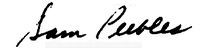
Sam Peebles
Sam read the note over while he fished a paper clip
out of his desk drawer. He considered changing“... returning your
books” to “... returning the library’s books” and decided to leave
it as it was. Ardelia Lortz had impressed him very much as the sort
of woman who subscribed to the philosophy of l‘Etat c’est
moi, even if l‘état in this case was just the local
library.
He removed a twenty-dollar bill from his wallet and
used the clip to attach it to the note. He hesitated a moment
longer, drumming his fingers restlessly on the edge of the
desk.
She’s going to look at this as a bribe. She’ll
probably be offended and mad as hell.
That might be true, but Sam didn’t care. He knew
what was behind the Lortz woman’s arch little call this
morning—behind both arch little calls, probably. He had
pulled her chain a little too hard about the posters in the
Children’s Library, and she was getting back at him—or trying to.
But this wasn’t the fourth grade, he wasn’t a scurrying, terrified
little kid (not anymore, at least), and he wasn’t going to be
intimidated. Not by the ill-tempered sign in the library foyer, nor
by the librarian’s you’re-one-whole-day-late-you-bad-boy-you
nagging.
“Fuck it!” he said out loud. “If you don’t want the
goddam money, stick it in the Library Defense Fund, or
something.”
He laid the note with the twenty paper-clipped to
it on the desk. He had no intention of presenting it in person so
she could get shirty on him. He would bind the two volumes together
with a couple of rubber bands after laying the note and the money
into one of them so it stuck out. Then he would simply dump the
whole shebang into the book-drop. He had spent six years in
Junction City without making Ardelia Lortz’s acquaintance; with any
luck, it would be six years before he saw her again.
Now all he had to do was find the books.
They were not on his study desk, that was for sure.
Sam went out into the dining room and looked on the table. It was
where he usually stacked things which needed to be returned. There
were two VHS tapes ready to go back to Bruce’s Video Stop, an
envelope with Paperboy written across the front, two folders
with insurance policies in them ... but no Speaker’s Companion.
No Best Loved Poems of the American People, either.
“Crap,” Sam said, and scratched his head. “Where
the belt—?”
He went out into the kitchen. Nothing on the
kitchen table but the morning paper; he’d put it down there when he
came in. He tossed it absently in the cardboard carton by the
woodstove as he checked the counter. Nothing on the counter but the
box from which he had taken last night’s frozen dinner.
He went slowly upstairs to check the rooms on the
second story, but he was already starting to get a very bad
feeling.
3
By three o’clock that afternoon, the bad feeling
was a lot worse. Sam Peebles was, in fact, fuming. After going
through the house twice from top to bottom (on the second pass he
even checked the cellar), he had gone down to the office, even
though he was pretty sure he had brought the two books home with
him when he left work late last Monday afternoon. Sure enough, he
had found nothing there. And here he was, most of a beautiful
spring Saturday shot in a fruitless search for two library books,
no further ahead.
He kept thinking of her arch tone—remember the
Library Policeman, Sam—and how happy she would feel if she knew
just how far under his skin she had gotten. If there really
were Library Police, Sam had no doubt at all that the woman
would be happy to sic one on him. The more he thought about it, the
madder he got.
He went back into his study. His note to Ardelia
Lortz, with the twenty attached, stared at him blandly from the
desk.
“Balls!” he cried, and was almost off on
another whirlwind search of the house before he caught himself and
stopped. That would accomplish nothing.
Suddenly he heard the voice of his long-dead
mother. It was soft and sweetly reasonable. When you can’t find
a thing, Samuel, tearing around and looking for it usually does no
good. Sit down and think things over instead. Use your head and
save your feet.
It had been good advice when he was ten; he guessed
it was just as good now that he was forty. Sam sat down behind his
desk, closed his eyes, and set out to trace the progress of those
goddamned library books from the moment Ms. Lortz had handed them
to him until ... whenever.
From the Library he had taken them back to the
office, stopping at Sam’s House of Pizza on the way for a
pepperoni-and-double-mushroom pie, which he had eaten at his desk
while he looked through The Speaker’s Companion for two
things: good jokes and how to use them. He remembered how careful
he’d been not to get even the smallest dollop of pizza sauce on the
book—which was sort of ironic, considering the fact that he
couldn’t find either of them now.
He had spent most of the afternoon on the speech,
working in the jokes, then rewriting the whole last part so the
poem would fit better. When he went home late Friday afternoon,
he’d taken the finished speech but not the books. He was sure of
that. Craig Jones had picked him up when it was time for the Rotary
Club dinner, and Craig had dropped him off later on—just in time
for Sam to baptize the WELCOME mat.
Saturday morning had been spent nursing his minor
but annoying hangover; for the rest of the weekend he had just
stayed around the house, reading, watching TV, and—let’s face it,
gang—basking in his triumph. He hadn’t gone near the office all
weekend. He was sure of it.
Okay, he thought. Here comes the hard
part. Now concentrate. But he didn’t need to concentrate all
that hard after all, he discovered.
He had started out of the office around quarter to
five on Monday afternoon, and then the phone had rung, calling him
back. It had been Stu Youngman, wanting him to write a large
homeowner’s policy. That had been the start of this week’s shower
of bucks. While he was talking with Stu, his eye had happened on
the two library books, still sitting on the corner of his desk.
When he left the second time, he’d had his briefcase in one hand
and the books in the other. He was positive of that much.
He had intended to return them to the Library that
evening, but then Frank Stephens had called, wanting him to come
out to dinner with him and his wife and their niece, who was
visiting from Omaha (when you were a bachelor in a small town, Sam
had discovered, even your casual acquaintances became relentless
matchmakers). They had gone to Brady’s Ribs, had returned
late—around eleven, late for a week-night—and by the time he got
home again, he had forgotten all about the library books.
After that, he lost sight of them completely. He
hadn’t thought of returning them—his unexpectedly brisk business
had taken up most of his thinking time—until the Lortz woman’s
call.
Okay—I probably haven’t moved them since then.
They must be right where I left them when I got home late Monday
afternoon.
For a moment he felt a burst of hope—maybe they
were still in the car! Then, just as he was getting up to check, he
remembered how he’d shifted his briefcase to the hand holding the
books when he’d arrived home on Monday. He’d done that so he could
get his housekey out of his right front pocket. He hadn’t left them
in the car at all.
So what did you do when you got in?
He saw himself unlocking the kitchen door, stepping
in, putting his briefcase on a kitchen chair, turning with the
books in his hand—
“Oh no,” Sam muttered. The bad feeling
returned in a rush.
There was a fair-sized cardboard carton sitting on
the shelf by his little kitchen woodstove, the kind of carton you
could pick up at the liquor store. It had been there for a couple
of years now. People sometimes packed their smaller belongings into
such cartons when they were moving house, but the cartons also made
great hold-alls. Sam used the one by the stove for newspaper
storage. He put each day’s paper into the box after he had finished
reading it; he had tossed today’s paper in only a short time
before. And, once every month or so—
“Dirty Dave!” Sam muttered.
He got up from behind his desk and hurried into the
kitchen.
4
The box, with Johnnie Walker’s monocled
ain’t-I-hip image on the side, was almost empty. Sam thumbed
through the thin sheaf of newspapers, knowing he would find nothing
but looking anyway, the way people do when they are so exasperated
they half-believe that just wanting a thing badly enough
will make it be there. He found the Saturday
Gazette—the one he had so recently disposed of—and the
Friday paper. No books between or beneath them, of course. Sam
stood there for a moment, thinking black thoughts, then went to the
telephone to call Mary Vasser, who cleaned house for him every
Thursday morning.
“Hello?” a faintly worried voice answered.
“Hi, Mary. This is Sam Peebles.”
“Sam?” The worry deepened. “Is something
wrong?”
Yes! By Monday afternoon the bitch who runs the
local Library is going to be after me! Probably with a cross and a
number of very long nails!
But of course he couldn’t say anything like that,
not to Mary; she was one of those unfortunate human beings who have
been born under a bad sign and live in their own dark cloud of
doomish premonition. The Mary Vassers of the world believe that
there are a great many large black safes dangling three stories
above a great many sidewalks, held by fraying cables, waiting for a
destiny to carry the doom-fated into the drop zone. If not a safe,
then a drunk driver; if not a drunk driver, a tidal wave (in Iowa?
yes, in Iowa); if not a tidal wave, a meteorite. Mary Vasser was
one of those afflicted folks who always want to know if
something is wrong when you call them on the phone.
“Nothing,” Sam said. “Nothing wrong at all. I just
wondered if you saw Dave on Thursday.” The question wasn’t much
more than a formality; the papers, after all, were gone, and Dirty
Dave was the only Newspaper Fairy in Junction City.
“Yes,” Mary agreed. Sam’s hearty assurance that
nothing was wrong seemed to have put her wind up even higher. Now
barely concealed terror positively vibrated in her voice. “He came
to get the papers. Was I wrong to let him? He’s been coming for
years, and I thought—”
“Not at all,” Sam said with insane cheerfulness. “I
just saw they were gone and thought I’d check that—”
“You never checked before.” Her voice
caught. “Is he all right? Has something happened to Dave?”
“No,” Sam said. “I mean, I don’t know. I just—” An
idea flashed into his mind. “The coupons!” he cried wildly. “I
forgot to clip the coupons on Thursday, so—”
“Oh!” she said. “You can have mine, if you
want.”
“No, I couldn’t do th—”
“I’ll bring them next Thursday,” she overrode him.
“I have thousands.” So many I’ll never get a chance to use them
all, her voice implied. After all, somewhere out there a
safe is waiting for me to walk under it, or a tree is waiting to
fall over in a windstorm and squash me, or in some North Dakota
motel a hair-dryer is waiting to fall off the shelf and into the
bathtub. I’m living on borrowed time, so what do I need a bunch
of fucking Folger’s Crystals coupons for?
“All right,” Sam said. “That would be great.
Thanks, Mary, you’re a peach.”
“And you’re sure nothing else is wrong?”
“Not a thing,” Sam replied, speaking more heartily
than ever. To himself he sounded like a lunatic top-sergeant urging
his few remaining men to mount a final fruitless frontal assault on
a fortified machine-gun nest. Come on, men, I think they might
be asleep!
“All right,” Mary said doubtfully, and Sam was
finally permitted to escape.
He sat down heavily in one of the kitchen chairs
and regarded the almost empty Johnnie Walker box with a bitter eye.
Dirty Dave had come to collect the newspapers, as he did during the
first week of every month, but this time he had unknowingly taken
along a little bonus: The Speaker’s Companion and Best
Loved Poems of the American People. And Sam had a very good
idea of what they were now.
Pulp. Recycled pulp.
Dirty Dave was one of Junction City’s functioning
alcoholics. Unable to hold down a steady job, he eked out a living
on the discards of others, and in that way he was a fairly useful
citizen. He collected returnable bottles, and, like twelve-year-old
Keith Jordan, he had a paper route. The only difference was that
Keith delivered the Junction City Gazette every day, and Dirty Dave
Duncan collected it—from Sam and God knew how many other homeowners
in the Kelton Avenue section of town—once a month. Sam had seen him
many times, trundling his shopping cart full of green plastic
garbage bags across town toward the Recycling Center which stood
between the old train depot and the small homeless shelter where
Dirty Dave and a dozen or so of his compadres spent most of
their nights.
He sat where he was for a moment longer, drumming
his fingers on the kitchen table, then got up, pulled on a jacket,
and went out to the car.