

How to:
Sculpting Feathers
When sculpting sugar feathers, let your creativity guide you. The more unique the shapes and sizes, the more realistic the feathers will appear. Instead of using feather cutters, I use a utility knife and cut feather shapes freehand. Here, the feathers are in neutral tones, but they can be made in vibrant colors as well.
TOOLS:
- cornstarch in a muslin bag for dusting
- silicone rolling pin
- neutral-toned Sugar Paste (page 59)
- damp tea towel wrapped in plastic wrap (see page 134)
- utility knife
- foam pad
- small-medium ball tool
- veining tool
- 20-gauge wire trimmed to 8-inch lengths
- 1:1 mixture of water and corn syrup
- fruit carton for drying
- paintbrush
- powder dyes
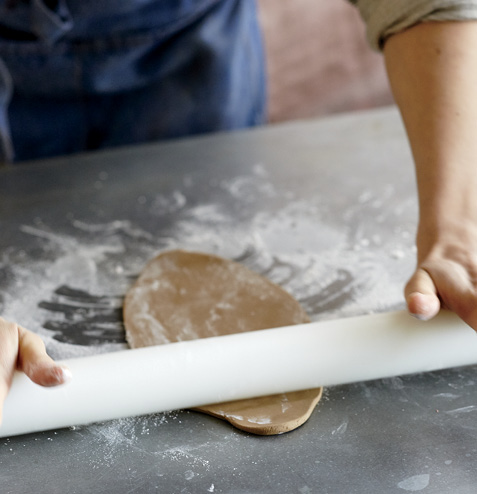
 On a cornstarch-dusted surface using
the silicone rolling pin, roll out the sugar paste to a thickness
of ¹⁄16
inch. Rotate the paste evenly as you roll out, as you would for a
piecrust. If the sugar paste begins to stick, dust more cornstarch
on the surface. Cover any sugar paste you are not using with the
plastic-wrapped tea towel to prevent the sugar paste from drying
out.
On a cornstarch-dusted surface using
the silicone rolling pin, roll out the sugar paste to a thickness
of ¹⁄16
inch. Rotate the paste evenly as you roll out, as you would for a
piecrust. If the sugar paste begins to stick, dust more cornstarch
on the surface. Cover any sugar paste you are not using with the
plastic-wrapped tea towel to prevent the sugar paste from drying
out.
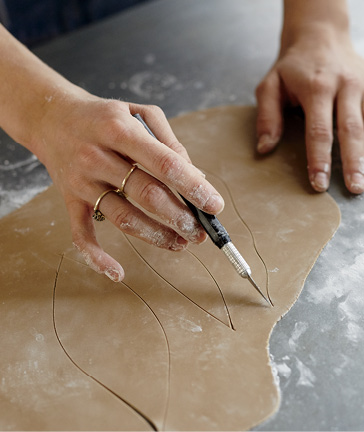
 Using the utility knife, cut out at
least 10 different sized feather shapes from the sugar paste. Place
them inside the tea towel to prevent the sugar paste from drying
out.
Using the utility knife, cut out at
least 10 different sized feather shapes from the sugar paste. Place
them inside the tea towel to prevent the sugar paste from drying
out.
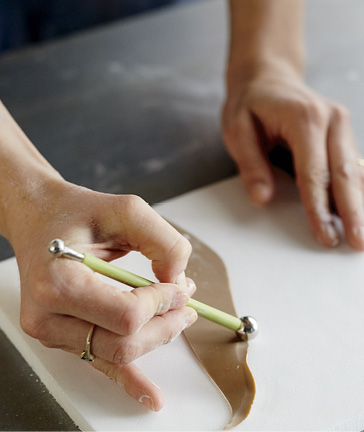
 Working with one at a time, place a
feather on a cornstarch-dusted foam pad and use the ball tool to
thin and ruffle the edges.
Working with one at a time, place a
feather on a cornstarch-dusted foam pad and use the ball tool to
thin and ruffle the edges.
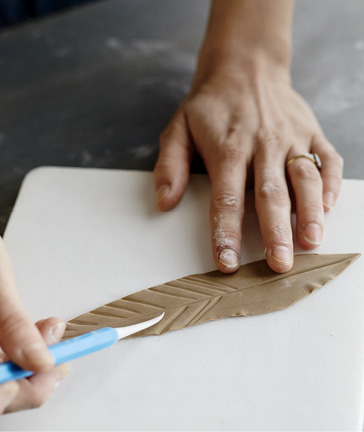
 Still working on the foam pad, use
the veining tool to lightly mark a line down the center of the
feather, then make lines from the center angled diagonally upwards
to create the feather’s veins.
Still working on the foam pad, use
the veining tool to lightly mark a line down the center of the
feather, then make lines from the center angled diagonally upwards
to create the feather’s veins.
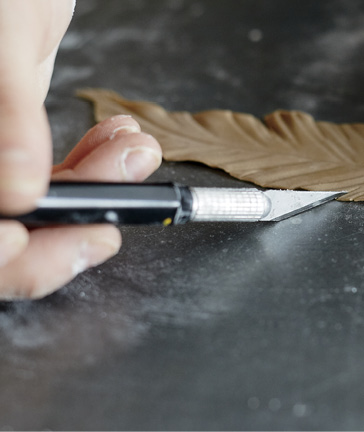
 Working on a nonstick surface, use
the utility knife to cut the edges of the feather to create
fringe.
Working on a nonstick surface, use
the utility knife to cut the edges of the feather to create
fringe.
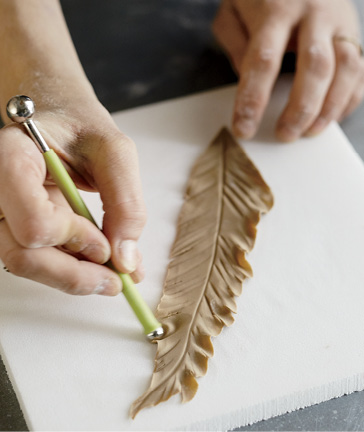
 Place the feather back on the foam
pad, and using the ball tool, thin out the edges, rolling the edges
in small back-and-forth motions to create rough, ruffled edges.
Place the feather back on the foam
pad, and using the ball tool, thin out the edges, rolling the edges
in small back-and-forth motions to create rough, ruffled edges.
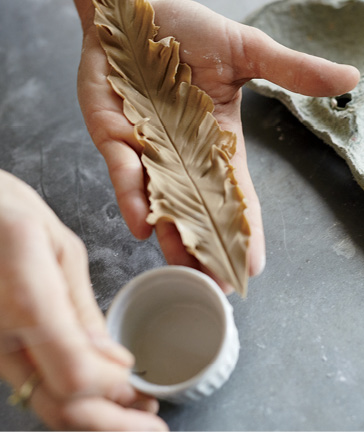
 Dip the end of the wire into the
water and corn syrup mixture to coat it with a modest amount.
Dip the end of the wire into the
water and corn syrup mixture to coat it with a modest amount.
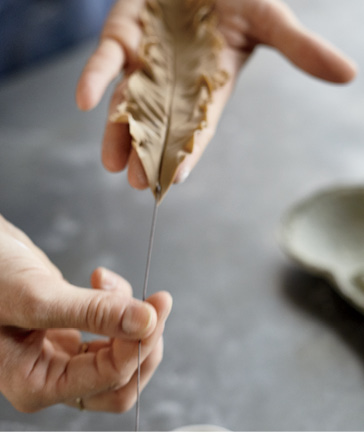
 Press the damp end of the wire in
the center of the feather, extending from the bottom about
one-quarter of the height of the feather.
Press the damp end of the wire in
the center of the feather, extending from the bottom about
one-quarter of the height of the feather.
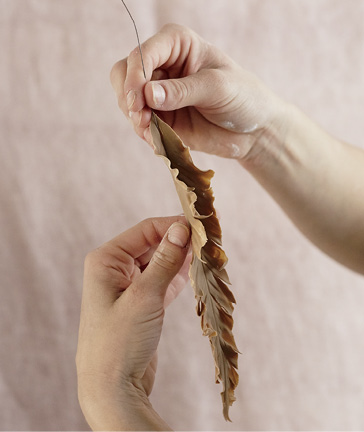
 Lightly pinch the underside of the
feather onto the wire so that the wire does not show.
Lightly pinch the underside of the
feather onto the wire so that the wire does not show.
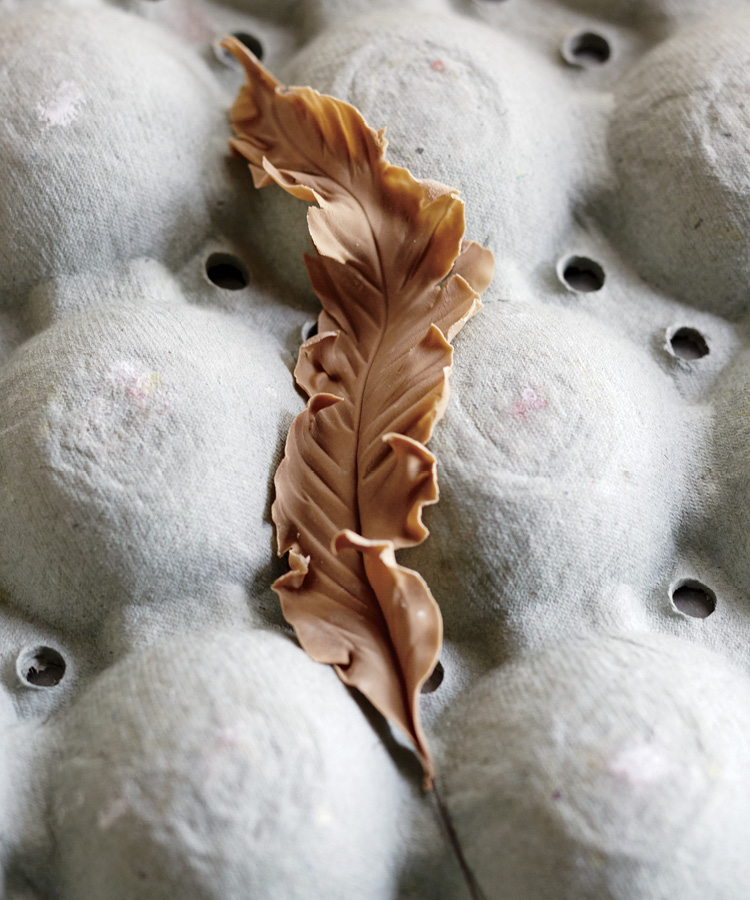
 Set the feather on a fruit carton
to dry, arranging it in an organic shape. Let the feathers dry for
at least 48 hours before continuing. To finish, use the paintbrush
and powder dyes to dry-dust each feather with darker and iridescent
shades. For reddish-brown feathers, I like to use raspberry or beet
powder.
Set the feather on a fruit carton
to dry, arranging it in an organic shape. Let the feathers dry for
at least 48 hours before continuing. To finish, use the paintbrush
and powder dyes to dry-dust each feather with darker and iridescent
shades. For reddish-brown feathers, I like to use raspberry or beet
powder.