

How to:
Sculpting Ferns on Wires
When attempting to sculpt replications from wildlife, seek imperfection and unevenness. Organisms in nature are not alike.
TOOLS:
- green Sugar Paste (page 59)
- cornstarch in a muslin bag for dusting
- large silicone rolling pin
- damp tea towel wrapped in plastic wrap (see page 134)
- fern cutter
- silicone fern imprint
- foam pad
- small-medium ball tool
- 24-gauge wire trimmed to 6-inch lengths
- 1:1 mixture of water and corn syrup
- fruit carton
- paintbrush
- green powder dye
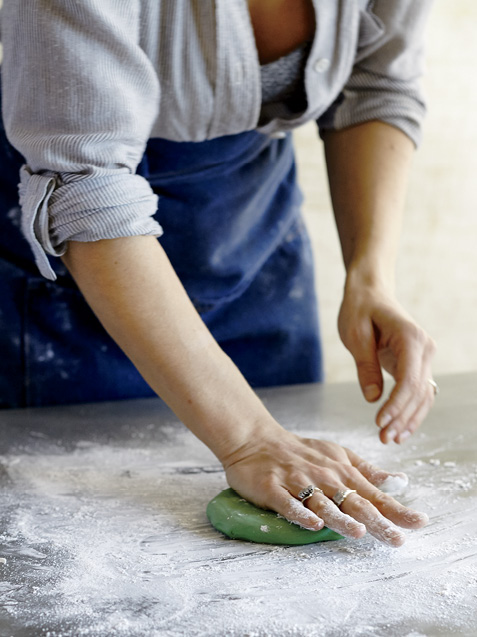
 Knead the green sugar paste on a
cornstarch-dusted nonstick surface to bring it to room
temperature.
Knead the green sugar paste on a
cornstarch-dusted nonstick surface to bring it to room
temperature.
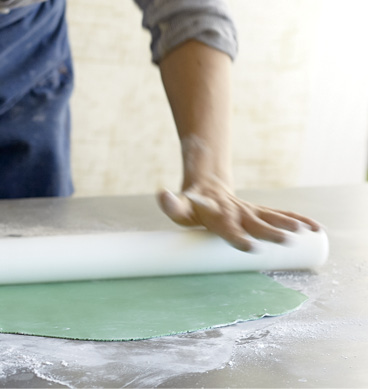
 Using the large silicone rolling
pin, roll out the sugar paste to a thickness of ¹⁄16 inch. Rotate the paste evenly, as
you would for a piecrust. If the sugar paste begins to stick, dust
more cornstarch on the surface. Cover any sugar paste that you are
not using with the plastic-wrapped tea towel to prevent it from
drying out.
Using the large silicone rolling
pin, roll out the sugar paste to a thickness of ¹⁄16 inch. Rotate the paste evenly, as
you would for a piecrust. If the sugar paste begins to stick, dust
more cornstarch on the surface. Cover any sugar paste that you are
not using with the plastic-wrapped tea towel to prevent it from
drying out.
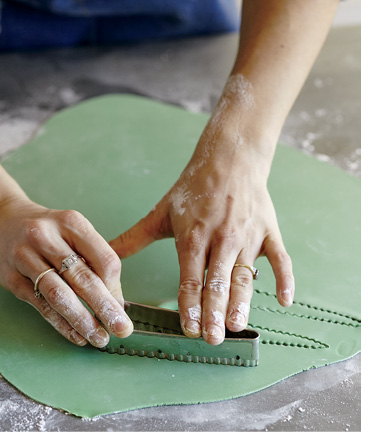
 Use the fern-shaped cutter to cut
out at least 10 fern shapes from the sugar paste. Place them inside
the tea towel to prevent them from drying out.
Use the fern-shaped cutter to cut
out at least 10 fern shapes from the sugar paste. Place them inside
the tea towel to prevent them from drying out.
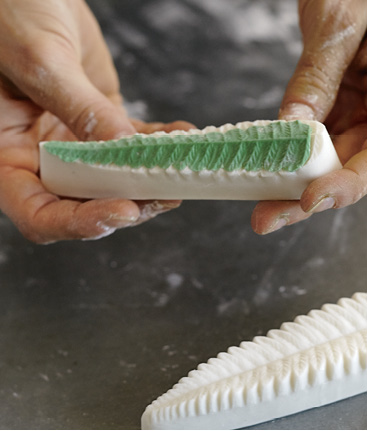
 Working with one at a time, place
each cutout on a silicone fern imprint. Press with even pressure to
imprint the entire leaf. Gently remove the leaf.
Working with one at a time, place
each cutout on a silicone fern imprint. Press with even pressure to
imprint the entire leaf. Gently remove the leaf.
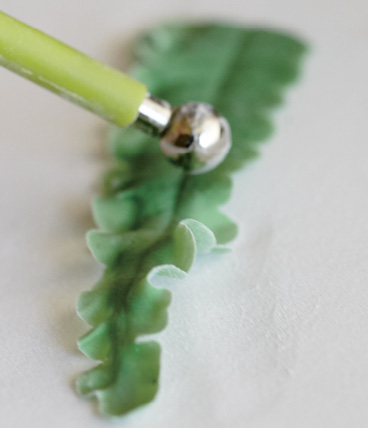
 Place the leaf on a
cornstarch-dusted foam pad. Use the ball tool to thin out the
edges, rolling the ball tool in small back-and-forth motions to
create rough, ruffled edges.
Place the leaf on a
cornstarch-dusted foam pad. Use the ball tool to thin out the
edges, rolling the ball tool in small back-and-forth motions to
create rough, ruffled edges.
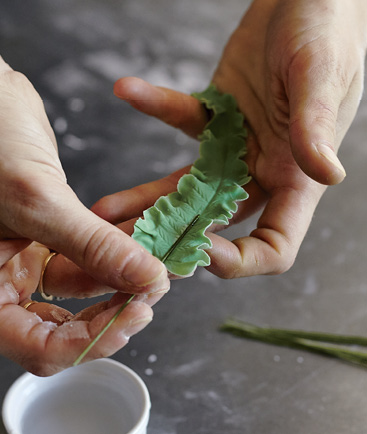
 Dip the end of a wire in a modest
amount of the water–corn syrup mixture. Press the damp end of the
wire in the center of the fern leaf, extending about one-quarter of
the length of the leaf. Lightly pinch the sugar leaf onto the wire
so that the wire does not show.
Dip the end of a wire in a modest
amount of the water–corn syrup mixture. Press the damp end of the
wire in the center of the fern leaf, extending about one-quarter of
the length of the leaf. Lightly pinch the sugar leaf onto the wire
so that the wire does not show.
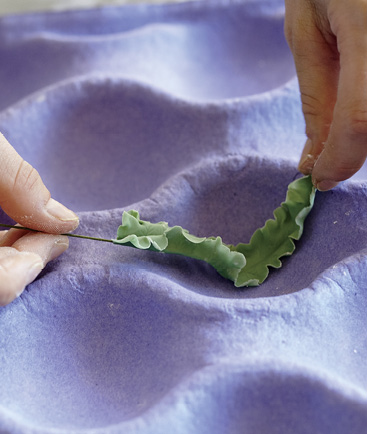
 Place in the fruit carton in a
natural shape and let dry for at least 48 hours. To finish,
dry-dust the leaf using the paintbrush with a darker shade of green
powder. Dried spinach or kale powder works great for this.
Place in the fruit carton in a
natural shape and let dry for at least 48 hours. To finish,
dry-dust the leaf using the paintbrush with a darker shade of green
powder. Dried spinach or kale powder works great for this.