
Chapter 2
What Kind of Garden Do You Want?
In This Chapter
• The timing of gardens
• The benefits of square-foot gardening
• Growing a little of this, a little of that
• Growing a garden of culinary delights, herbs, or medicinals
• Who to call when you need help
In this chapter, we look at what sort of garden you might want to create and check out how much time it will take to achieve the type of garden you want. Is your garden going to be one that gives you a smorgasbord of vegetables or focus on just a few culinary favorites? Are the medicinal and curative powers of herbs your special interest? Or does the idea of growing your own organic produce appeal to you? When considering these types of gardens, how much can you realistically handle? In addition to looking at the issues behind these questions, we also look at the highly specialized concept of square-foot gardening.
Later chapters cover, in much more detail, the techniques for growing various fruits and vegetables. In this chapter, we focus on the general types of gardens you might want to grow.
Time Is of the Essence
Gardening is America’s favorite pastime—with the emphasis on time. Unlike other hobbies and avocations like golf, stamp collecting, or flea marketing, gardeners can only take time off in the off-season. And even then there’s still garden-related stuff to do. When you commit to growing plants, you have to tend to their needs or they die. That’s a basic fact of life!
So how much time does it take to grow a garden?
The reality is, it takes as much as you’re willing to give. That’s not being flip. You can grow a few plants, such as herbs, in a couple little pots on a windowsill or on the terrace with minimal time commitment. Count on ½ hour to put them in pots and a couple minutes each week to keep them watered and fertilized. That’s it. No fuss, no muss.
If, on the other hand, your plan is to grow enough food to feed your family all year with some left over to sell at a little stand at the end of the driveway, you might want to consider quitting your day job and redefining your “job” as “gardener.”
To get an idea of what you have to do to establish an extensive vegetable garden in a space that might have previously been your lawn, check out the following to-do list.
1. Test the soil.
2. Remove sod.
3. Turn the soil.
4. Remove rocks and roots.
5. Amend the soil.
6. Install irrigation.
7. Install fencing.
8. Create furrows, rows, mounds, and so on.
9. Buy seeds and plants.
10. Plant seeds and plants.
11. Put in trellises, plant cages, or stakes.
12. Water seeded and planted areas.
13. Thin seeded areas.
14. Weed furrows, rows, mounds, and so on.
15. Mulch.
16. Continue to water.
17. Continue to weed.
18. Deal with bugs.
19. Harvest.
20. Remove dead plants.
21. Turn the soil.
22. Plant cover crop.
The size and type of garden you want dictates how much time you should spend on gardening and on how many of these steps you need to take. Not every garden requires each one of these steps, but you get the picture.
Even if you’ve never gardened before, you can estimate how much time it will take you to do some of these tasks. When you have a number in mind, double it. Things always take much longer than you had planned. If you think you can afford that kind of time, go for it!
Square-Foot Gardening
About 25 years ago, a fellow by the name of Mel Bartholomew created a method of gardening based on the traditional French-intensive way of growing edibles in backyards. The premise is that plants don’t really need as much room as we tend to give them, and they’ll do quite well when they’re all crammed in together, as long as you make good preparations for them. This is a terrific approach for people who like things neat and tidy and are willing to do a fair amount of preparation work in the beginning.
Prof. Price’s Pointers
The foundation for French-intensive gardening, which was the inspiration for square-foot gardening, is perfectly prepared soil. The long, narrow beds (to fit in the long, narrow backyards) were dug down at least 2 feet deep. Then the soil was amended with rich compost and humus and tilled to a light, fluffy consistency to allow for good root growth.
Square-foot gardens are usually done in raised beds that take a bit of time and, sometimes, cash to construct. But once installed, maintenance is less time-consuming.
To reduce the environmental impact of building a square-foot garden, you can look for recycled or leftover wood online, ask local contractors for extras, or ask for scraps at a lumber yard. If you’re concerned about chemicals, you might want to avoid pressure-treated wood; and because railroad ties may have been soaked in kreosote, avoid these when creating raised vegetable beds.
Turn to Chapter 12 for more on square-foot gardening.
A Taster’s Garden
A taster’s garden is the type of garden that appeals to most people. You plant a few basic things like tomatoes, green peppers, and basil. And maybe you add eggplant, onions, and kale. You might even try broccoli, watermelon, and butternut squash. A little of this and a little of that is the idea; you don’t want too much of any one variety. A taster’s garden is a great way to get your hands dirty for the first time.
Food for Thought
If your space and time are limited, plant your taster’s taster’s garden in a collection of pots on your deck or patio. You might have to leave out the watermelon and butternut squash, but you could add more herbs, and perhaps peas, beans, lettuce, and hot peppers.
Even a small garden like a taster’s garden requires many hours of preparation and maintenance. When it’s established (the initial preparation, fencing, irrigation, and other structural aspects complete), you can experiment with different plants each year, adding more of the vegetables you really like, eliminating those that don’t work so well for you, and trying a few new things.
If you’re a total beginner, the taster’s garden is the best approach to try first.
A Garden of Culinary Delights
Those gardeners who love to cook and love to eat should plant a garden of culinary delights. In these gardens, you can grow your favorite gourmet treats. Sure, you can find these special things at a green grocer’s, in specialty markets, or even your local supermarket, but they’re so much tastier when they’re freshly picked just before being added to the pot. And depending on their rarity, the prices you might have to pay in a market might be exorbitant.
Given unlimited garden space and time on my hands, my garden of culinary delights would include the following:
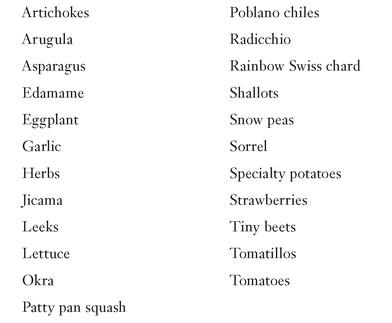
These are the fruits and vegetables I like best. Some of them, such as the specialty potatoes, rainbow Swiss chard, and delicate leaf lettuces, cost a fortune in markets. So I would grow lots of them to gorge on for the brief time they’re in season.
If you want to try your hand at herbs, basil, parsley, dill, rosemary, sage, thyme, chervil, cilantro, and chives are good choices. If you’re trying lettuce, go for all the frilly, delicate leaf varieties. And for tomatoes, try big juicy ones, tiny grape types, and a few interesting heirlooms and Italian plum varieties.
Unfortunately, I don’t have the time or space to grow all these things, so I have to select the things that make sense for the way I garden now. That limits me to a few of the herbs (basil, parsley, dill, and coriander), the lettuces, and a couple tomato plants. If I’m feeling really ambitious, I would add arugula and sorrel. Then I just have to rely on my more prolific gardening friends to include me in their dinner parties—I’ll bring the salad! Remember, you have to consider both time and space when deciding what you’ll choose to prioritize with your culinary gardens, or with any garden.
Herb and Medicinal Gardening
For many gardeners, especially those with limited time and space, a garden devoted to herbs is enormously satisfying. An herb garden also enables you to explore the nuances of folk and herbal remedies.
We take a detailed look at herb gardening in Chapter 16.
Growing Seasonal Treats
Gardeners who specialize in flowering perennials strive to have something in bloom throughout the growing season. It takes considerable horticultural skill to plan a successful succession of blooms. Gardeners who grow vegetables might also have a succession of harvests in mind when they create their gardens. A few examples are shown in the following table.
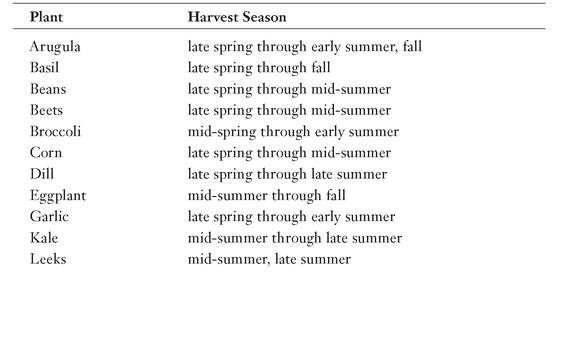
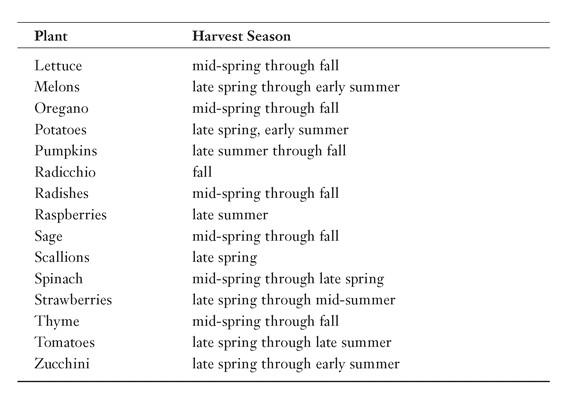
Please note that this set of harvest times is approximate and based on conditions in my own Pennsylvania garden. Harvest seasons are different in other parts of the country. Representatives from your county extension office, local CSA, or garden center can advise you.
By starting seeds indoors, using a cold frame (like a little greenhouse; more on this later), buying established plants, and planting several varieties of the same vegetable or fruit, you can stretch out the harvest and enjoy a wide variety of edibles for many months. And if you live in warm climates such as California or Florida, you already have nearly year-long growing seasons, although not all plants will thrive, or even grow at all, under those conditions.
Tutti-Frutti Gardens
We could write a whole book on the topic of fruit trees, and a number of fruits would be good for edible gardens. Check out Chapter 18 for more detailed information about growing fruits such as strawberries, rhubarb, melons, and ground cherries.
Hiring Help
A friend wanted an organic vegetable garden in her backyard for some very good reasons: she wanted to serve her family fresh, organic food, and it was important to her that her children understood that food comes not just from the grocery store but from the beautiful bounty of nature’s gifts. But she didn’t have the time nor the skill set to plant or tend to the type of garden she wanted. So she hired a woman with a small company called The Turnip Truck who provides that highly specialized service.
You might not need someone to handle the whole job for you, but some aspects of starting or tending a garden might require more time, skill, or physical strength than you have. In such cases, call in the turnip truck!
Some ideal jobs for hired hands include initial tilling, installing irrigation systems, putting up fences, pulling weeds, laying down mulch, spreading manure, and turning the garden at the end of the season.

Compost Pile
If paying for a little help fits your budget, be sure your hired help know what they’re doing. Local teens or other inexperienced gardeners might be willing to help with weeding, watering, and other chores in your garden, but they may need you to instruct them carefully. It’s disheartening for everyone when a new hired hand proudly shows off his hours of labor only to be told that the weeds he pulled out were actually the new asparagus plants that cost you $100!
The Least You Need to Know
• Part of the fun of gardening is deciding what kind of garden suits your lifestyle and your tastes.
• Carefully consider the time you need for the style of garden you plan, and be realistic when evaluating your commitment to the type of garden you choose.
• It’s always a good idea to start small when you’re new to gardening.
• Hire help if you need it.