
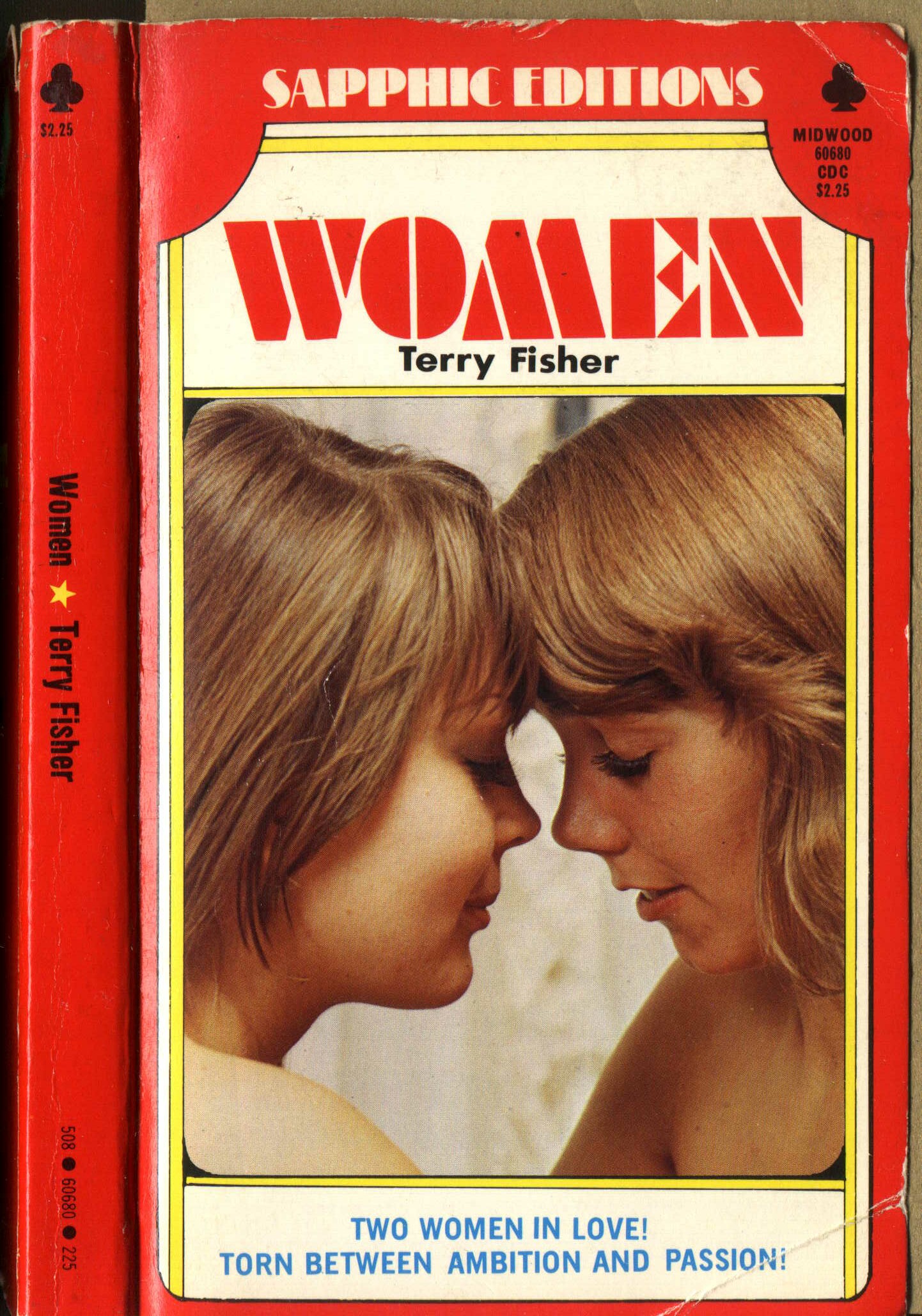
Terry Fisher
Women
CHAPTER ONE
The auditorium hummed with the bustle of the students taking their instruments out of cases and getting into seats. There were bursts of discordant noise as the various instruments ran short scales, loosening up, and there were occasional jokes and laughter, a murmur of conversation, and a rattle of chairs and music stands. The librarian trotted in a side door with an armload of music folders, followed by a couple of students with heavier loads, and they began working their way along the rows of the orchestra, putting the folders on the stands.
The concertmaster, a thin, nervous-looking young man of nineteen or so who had lank, black hair and a bad complexion, rose from his seat in the string section and walked to the podium, carrying his violin. He took the baton from the narrow shelf under the podium and rapped it against the side of the podium, and the conversation and movements slowly faded away. He replaced the baton and tucked his violin under his chin, then he slowly drew the bow across the strings and sounding a soft, clear A. The piano picked it up, chording, then the other instruments began to pick it up. The sound swelled, filling the auditorium as the instruments harmonized, and the concertmaster walked back to his chair. The A faded and the instruments began to noodle softly in a wavering blur of sound as the students loosened their fingers, with a background rustle from the percussion section as the drummer whisked at a snare with a pair of brooms.
The door at the other end of the auditorium opened and closed, and a woman became visible as she walked from the darkness along the center aisle toward the stage. She was a slender, lithe woman of medium height, and she was carrying a motorcycle helmet in one hand and an attache case in the other. Her brown hair was in a short, loose, casually arranged tumble of curls, and she wore flared slacks, a blouse, and a short jacket. The slacks hugged her slender hips, tiny waist, and full, smoothly contoured thighs, and the cuffs flapped around her short boots as she walked along the open space in front of the stage toward the steps at the side of it. Her features were exceptionally attractive, with large, grey eyes, full lips, and a small nose. At first glance her face seemed to enhance her attractiveness. Her eyes were large and required no cosmetic emphasis, and even from a distance her lashes were long and thick, with a natural curl. The contrast between the natural color of her lips and that of her skin approached that of a pale lipstick, and her eyebrows were dark and full. She wore no jewelry.
She walked across the stage toward the podium in a firm, determined stride, her hips swaying from side to side with a graceful, unaffected motion, and she stared straight ahead, not looking at the students. Her age was difficult to guess. The slender build and the way she walked was youthful and there were no hints of lines at the corners of her eyes and mouth, yet there was a mature and experienced air of confidence and authority about her. The line of her lips also had the slightly tense, nervous firmness seen in those who have endured anguish or sustained months of pain. The students silently watched her, their expressions ranging from indifference to guarded apprehension. A couple of the male students stared at her speculatively. The harpist, a tall brunette of twenty or so, looked at her fixedly then glanced down with a slight flush on her cheeks.
She put the motorcycle helmet on the floor by the podium, opened the attache case and took a notebook out, then put the attache case by the helmet and stepped up on the podium. "Good afternoon."
Her voice was soft and well modulated, but it had a penetrating quality which carried to the back of the orchestra. There was a murmur of response from the students then a hushed quiet as she opened the notebook and jotted down check marks for attendance. There was complete silence in the auditorium except for the muffled movements of the librarian and the two students who were still moving along the rows and putting the music on the stands.
The librarian had arrived late with the music, and a frown creased her brow as she distributed the folders she was carrying and watched the two students with anxious glances. She was a blonde in her early twenties, and her long, thick tresses were tied at the back of her head in a ponytail. Her light cotton dress fit her well, hugging the swelling curves of her buttocks and her jutting breasts, and the male students glanced at her and exchanged winks as she moved from place to place, her long, bare legs flashing. She had soft, beautiful features and a smooth, creamy complexion, marred by her frown. The two students finished and she nodded for them to leave, then she walked down the steps to the podium with the master folder of music. The woman on the podium was still making check marks on the class roster as the librarian edged the folder of music onto the podium by the notebook. She glanced down at the librarian and gave her a perfunctory smile as she took the folder and pulled it to the center. The librarian smiled apologetically, started to say something, then glanced at the orchestra and closed her mouth as she turned away.
The woman on the podium finished with the notebook and put it to one side, then opened the music folder. Her fingers searched the shelf under the stand for the baton, and she picked it up and absently stroked it against the side of her face as she leafed through the music. The top pieces were the scores which the orchestra had previously studied and had presumably mastered, and in the back of the folder was the score for new music for the week. Her brow wrinkled in a frown as she looked at it. The Beethoven Pastoral. Beautiful music and a powerful composition, but excruciatingly difficult even for a symphony orchestra of seasoned musicians to master. In the time allotted for each new piece, in any event. She sighed with resignation, a mental picture of a dart board arrangement for curriculum selection fleeting through her mind. The students remained absolutely silent and motionless, watching her intently. She was somewhat of an enigma. One of the few well-known female conductors, she had arrived in the city a couple of years before to accept a post as assistant to the conductor of the local philharmonic, even though the prestigiousness of her doctorate in music from the university in Vienna appeared to outweigh the conductor's academic qualifications. At the same time she had expressed a willingness to take the local conservatory orchestra class, an offer which had been quickly snapped up by the conservatory. Her only interests seemed to be the philharmonic and her classes, where her performance was brilliant, and the rest of her time seemed to be spent in the quiet seclusion of her house in one of the better residential areas.
She was known to be pleasantly businesslike until aroused, but in common with other conductors her boiling point seemed to be constantly adjusted back and forth by some giant cosmic rhythm which worked in conjunction with artistic temperament. Her classes were disciplined sessions without general conversations, in contrast to other more relaxed classes where anything from world affairs to the weather might be entertained as a topic of discussion. Some students had ventured to ask her a question about herself and had been coldly ignored. An indication that someone had failed to completely study their score would bring an icy look or an acid comment, and an indication of inattention would result in a scathing tirade more than sufficient to rattle the composure of the most self-confident student.
"Let us work on the Beethoven."
The comment was in a low, quiet tone, and there was a flurry of movement and rustling of paper as they dug through their folders. She looked down at the score, her eyes moving over the familiar notes, and waited for quiet. There was a thump as the drummer, and awkward, overweight, red-faced young man of twenty or so dropped his folder to the floor, then a scuffling as he gathered it back up. She sighed almost imperceptibly at the noise; he periodically managed to drop his music, one of the sticks, or turned over his music stand. There was a muffled giggle which choked off as she raised her eyes and glanced around. Then silence.
"First violin?"
"Yes, Doctor Wycliffe?"
"Will you begin upbow or downbow?"
It was the concertmaster, and he pushed his hair back from the side of his face with a nervous gesture. "Downbow."
"Very good. The violin section will please annotate their scores. Cello?"
The first cello was a tall, blue-eyed German exchange student with flaxen-yellow hair. He straightened in his chair, coming to a rigid, straight backed position. "Jawohl, Fraulein Doktor?"
"Abstrich oder herunterstrich?" The German rippled with the ease of long practice. It had been the subject of a heated argument between the exchange student and several of the American students. The exchange student had adamantly insisted she was German-born because of her classical Viennese accent and had refused the evidence pointed out in the Biographical Dictionary of Musicians that she'd been born in Cincinnati. A student had asked her about it in class and had been ignored.
"Herunterstrich, Fraulein Doktor."
"Sehr gut. Cello will begin downbow – please annotate your score. Viol?"
"Yes, Doctor Wycliffe."
"Will you begin upbow or downbow?"
He was a tall, gangling man in his early twenties, and he was leaning on his instrument and nonchalantly chewing gum. He shifted his gum reflectively to the other side of his mouth and almost but not quite shrugged. "Downbow."
She looked down at the music in front of her, her face expressionless, and the silence slowly stretched out into long, taut seconds. The bass viol player moved his feet uncomfortably and stood more erect and he stopped chewing his gum. A couple of the other students glanced up at him furtively in sympathy then looked back at the conductress.
"Begin downbow and play the first two bars, please," she said quietly.
He straightened and shifted his shoulders, then the looked down at the music and began playing the notes. The moaning, rumbling sounds of the viol echoed through the auditorium as he sawed the bow back and forth and moved his fingers up and down the strings. Then his face tightened as he pulled the bow more slowly, trying to drag out a last note without reversing the direction of the bow, then he switched direction and there was a slight shift in timbre.
The baton rapped against the podium and the sound of the viol stopped. "Those notes are accoppia to, are they not, Mr. Butler?"
"Yes, but…"
"But what, Mr. Butler? Did you play the notes accoppiato, or did you introduce a break and play the second note accrescendo?"
"Well, I…" He shrugged and shuffled his feet as he fell silent.
"Do you propose to improve Beethoven, Mr. Butler or is it simply that you didn't study the score?" The volume of her voice was still low, but it was becoming more acid and penetrating, and the slightest hint of a German accent was beginning to creep into it.
"Yes, well, I studied it," he said defensively. "I studied it, all right."
Her expression was still neutral, but her lips were somewhat thinner as she looked at him. The silence in the auditorium and on the stage was taut and breathless, and the sound of a car on the street outside came clearly through the window. She looked up at him for a moment longer, then looked back down at the music in front of her. "Begin upbow, Mr. Butler," she said the tone of her voice less incisive. "And when you study your scores in the future, you might find it a not inconsiderable assistance to have your instrument available to examine the bowing technique in conjunction with your studying. I cannot overemphasize bowing technique – as you have just demonstrated, it is crucially important in string instruments. As important as tuning."
The tension faded as she turned a page of the music in front of her, looking at it. The bass viol player started to chew his gum again, then he discovered that it wasn't in his mouth; he had swallowed it. He started to reach into his pocket for more, then he changed his mind and tapped his bow nervously against his leg, glancing around. The drummer's eyes met his, and they exchanged a wry grimace before looking back at the conductress…
She continued talking to the players of various instruments for a few minutes, then she rapped the podium with the baton and raised her hands. There was a quick rustle then absolute silence as they looked at her, waiting. Her hands swept down, and the auditorium was filled with the thunder of the first notes of the opening. She snapped the baton in a quick, whipping motion to set the driving cadence of the music and shot her left hand toward the kettle drums and lifted it, bringing in the deep, roaring rumble of the drums, then she suddenly dropped her hand,; and rapped the baton sharply against the side of the podium, frowning at the oboist.
Silence immediately fell again, and the oboist looked at her and cleared his throat nervously.
"Mr. Harcourt, your performance during class last week was not exceptional, but at least your oboe sounded like an oboe. Now it does not, Mr. Harcourt. In fact, with the possible exception of the primitive whistles made by some aboriginal tribes for uses in their ceremonies, it does not sound like a musical instrument, Mr. Harcourt. May I ask what you have done to your oboe to produce the sounds which are coming from it?"
There were muffled sounds of mirth and a quiet stirring in the orchestra, then absolute silence again. The oboist cleared his throat. "Well, maybe it's the reed…" he suggested weakly, then his voice died away and he cleared his throat again.
She looked at him in silence, then sighed and looked down at the music in front of her. "Mr. Harcourt, what is there about the reed you are using which would distinguish it from the reed you were using last week?"
"Well, I tapered it myself…"
A thin smile lifted the corners of her lips slightly… "I see. Your interest and enthusiasm is duly noted." She raised her head and looked around the orchestra. "Some of you might not be aware of the fact that most oboists in symphony orchestras cut and taper their own reeds to fit the individual requirements of their embouchure. However," she glanced at Harcourt and her slight smile returned, "they normally check the reeds to see how they sound before they try to use them." There was a murmur of quiet laughter from the orchestra, and Harcourt squirmed. "Do you have a factory reed in your instrument case, Mr. Harcourt?"
"Yes, well… yes…"
"Please replace the reed in your instrument, Mr. Harcourt, and you might check to see if Professor Leibel will have an opportunity to work with you on cutting and tapering your own reeds – he is a brilliant oboist, and I'm sure he does his own." The oboist began digging in the instrument case by his chair, and she looked up at the drums. "Please watch my left hand, Mr. Campbell, and bring in the roll as I raise my hand. But that is only for the volume, not the tempo. You must be very careful about the tempo as you increase the volume watch the baton and the notes on your score."
There was a rattle as the oboist put the mouthpiece back on his instrument, and she almost smiled again as she glanced at him, waiting for him to get ready. He adjusted it and dampened it, nodding to her, and she raised her hands and poised the baton again. "Very well. Tutti." She swept the baton down, and the swelling throb of the entrance to the first movement filled the auditorium once more.
She drilled them on the first movement of the symphony for the entire class period, going over and over it and occasionally stopping to correct wrong notes and technique. By the time the end of the period approached the music was beginning to flow and she was working in the pitch and balance of the various instrument sections, refining it. Finally she glanced at the clock over the exit and rapped the baton against the podium.
"Very good – that will be enough for today. Please go over your scores very carefully tonight and we will work on the second movement tomorrow." She slid the folder of music to one side and stepped down from the podium, opening the attache case and dropping her notebook into it. "Good afternoon," she said, picking up the motorcycle helmet and walking toward the side of the stage with her quick, firm stride.
There was a murmur of response from the students, and they started moving around and getting out of their chairs as she left the stage. Some of them began putting their instruments in their cases and others began collecting in groups to chat. The tall, slender brunette who played the harp remained in her seat and watched the conductress walking along the center aisle toward the other end of the auditorium. Her long, sensitive fingers moved on the strings of the harp, barely touching them and making a whisper of a low, plaintive melody as her cheek rested against the frame of the harp and her eyes followed the conductress with a deep, hungry sight in their depths. The conductress faded into the darkness at the other end of the auditorium, and she dropped her eyes and sighed. Her fingers moved restlessly over the strings in a whirling cascade of rolling notes, then she stood up and began gathering her things together.
"Doctor Wycliffe?"
Janice stopped and turned as she crossed the foyer of the auditorium toward the front entrance. It was the librarian, getting up from a small couch at the side of the foyer; she had apparently been waiting. Janice smiled perfunctorily. "Yes?"
"Doctor Wycliffe, I'm Celia Thompson," the blonde said, walking toward Janice and pushing nervously at loose strands of hair which were hanging around the sides of her face. "I wanted to apologize for being late today with the music."
"That's quite all right, Ms. Thompson. You didn't disturb the class."
"Yes, well, I've been told by the head librarian to have the music in place before class starts, and…" She shrugged, smiling wryly. "Well, I'd hate to get a complaint or something – I really need the money I get working as a librarian…"
"I'm not given to complaining about trifles, Ms. Thompson," Janice said, a note of reproof in her voice. "Now I've gone and put my foot in my mouth again," Celia sighed. "Look, what I meant was… well, I was up until all hours last night working on a lesson for my comp class, and I didn't even get to bed until four this morning. And then I had an eight o'clock class…"
"I understand," Janice said, moving toward the entrance. "And it's quite all right, Ms. Thompson."
Celia started walking with her and stepped forward to open the door for her. "I understand that your compositions have been performed in all the big concert halls in Europe."
"Thank you," Janice murmured, walking through the door, then she paused and waited for Celia, her eyes coolly surveying the sidewalk and street outside the auditorium. "Have you found that your work with the library has helped you in your studies?"
Celia looked at her, puzzled then discomfited by the bland disregard of her comment. She cleared her throat self consciously and nodded. "Yes, well, it's… well, I've become familiar with the composers and their works…"
Janice gave her the cool, level smile which seemed to be natural with her as they started walking down the steps toward the sidewalk. "Not an inconsiderable advantage, surely."
Celia shook her head and looked down at her feet. "No, it's helped me a lot in history, and… yes, well it's helped. Comp is giving me a fit, though."
"Composition is a difficult subject," Janice murmured, nodding, then she sighed. "And even more difficult in practice."
There was a massive Harley-Davidson motorcycle parked by the curb, a long, heavy machine with glittering chrome exhausts and brightly shining enamel. She walked across the sidewalk to it, lifted the top of one of the contoured plastic saddle bags over the rear wheels and dropped the attache case into it, then she turned back toward Celia as she lifted her helmet and slid it onto her head. "But I'm sure you will master composition if you persevere, Ms. Thompson," she said smiling.
Celia smiled and nodded, glancing at the helmet again. It was large and heavy, looking almost outsize on Janice, and the bright pattern of orange and yellow flashes seemed to contrast with her sedate, reserved manner. "Yes," she said, smiling absently and nodding, still looking at the helmet. "Would it be cribbing if I asked you to give me a little help with…?" Her voice faded away as her attention seemed to snap back to what she was about to ask, and she flushed with embarrassment. "Hey, listen – I must be losing my mind. Every student in this whole conservatory would be after you to…" She broke off and started moving away. "Hey, look, I'm sorry about being late with the music, Doctor Wycliffe – I won't do it again not to you, anyway."
"It isn't that it would be too much trouble, Ms. Thompson…"
"…was out of my mind for saying something like that to you…"
"…please listen to me. Composition is a very personal, highly individual part of music. All anyone can do is simply point out that there are certain accepted conventions, rules, and practices to be observed in the various forms, and then you're by yourself – all alone. There are, of course, certain mistakes… pitfalls in the process, but the interests of education are possibly better served by one's finding them and dealing with them alone."
Celia nodded with a confused, flustered smile on her face as she moved back toward Janice, and she impulsively took Janice's hand in hers. "Well, I lost my head for a minute there. Everyone talks about how busy you are with the phil and everything, and how you like to be left alone…" Her voice trailed off as she realized she was holding Janice's hand, and she flushed deeply as she quickly released it. Her mouth opened to say something else, but she turned her head away in embarrassment, clearing her throat.
Janice had stiffened imperceptibly when Celia took her hand, and she had clamped a firm control over her reactions to keep her hand limp and unresponsive. When Celia released her hand, Janice began fastening the chin strap on her helmet, and she glanced at Celia thoughtfully. She looked away again, pursing her lips and thinking, and there was a moment of strained silence as Celia still looked away, trying to regain her composure. "How many students are in your composition class, Ms. Thompson?"
She cleared her throat again, almost glancing at Janice but dropping her eyes before they met Janice's. "Twenty-six," she murmured in a weak voice.
"And who is the instructor?"
"Ms. Carlin."
Janice's mouth tightened slightly; her impression of the woman was highly negative. She thought again for a moment, still tugging at her chin strap and looking along the street. "Perhaps I could help you a little, then, Ms. Thompson. But it would be… something I wouldn't want… to become common knowledge."
The blonde turned and looked at Janice, blinking rapidly. Her eyes moved over Janice's face as though she were actually seeing her for the first time, and her eyes involuntarily fell to Janice's breasts which bulged out in the light jacket. She flushed darkly and looked away again. "No, look, I can't ask you to do that…"
"Well, it could be that I would be of no assistance whatsoever…"
"No!" Celia almost shouted, her head snapping around, then she cleared her throat and looked away again. "Sorry. It's just that," she made an aimless motion with one hand, "I can't imagine anything that you couldn't do better than anyone else…"
Janice chuckled, and her attractive face suddenly became dramatically beautiful as the wide smile spread over her features and the edges of her white, sparkling teeth became visible between her lips. "Well, hardly," she murmured, taking her keys from her pocket and looking down at them, separating the key for the motorcycle. "What are you doing tonight, Celia?"
The blonde's head snapped around at the use of her first name. She frowned thoughtfully, then her eyes became bold as Janice continued to look down at her keys. Celia looked at Janice's face, almost hidden in the large helmet, then her eyes dropped to Janice's tiny waist and gracefully contoured hips and buttocks. She licked her lips and swallowed. "Nothing, Doctor Wycliffe. Nothing tonight tomorrow night, or any other time…"
"I have a self defense class tomorrow night, but I'll be…"
"Self defense class?"
Janice's lips tightened in irritation at herself, and she turned her head and looked at Celia. "That is something else I wouldn't want to become common knowledge," she said quietly.
"No one will ever hear about it from me, Doctor Wycliffe. Honest to God, I'd never tell."
"Please call me Janice," Janice said with a sudden smile. Celia seemed to be suddenly breathless as she looked at Janice's smiling face, then she smiled widely in response. "Yes… yes, all right," she murmured. "Thank you very much… Janice."
"Bring your notes and come by at eight. I live at…"
"I know where you live. I followed you home one time. It was… last month… the afternoon you conducted the matinee performance… Saturday…"
"At eight, then."
Celia continued to look down at her, a flushed smile on her face. "…best performance the phil ever gave… head and shoulders over what Doctor Jannison could get out of them on the best day of his life… it was a performance I'll always remember… just followed you home…" Her voice faded into silence and she looked down at the sidewalk, still smiling as she scuffed at the pavement with the toe of her shoe.
Janice straddled the motorcycle and plugged the key in, turning it. "I'll see you tonight, Celia." Celia's blue eyes sparkled as she nodded. "All right. And no one else will know." Janice touched the starter, and the engine snarled to a roaring start with a plume of smoke coming from the chrome tailpipes. Then it idled down and chugged smoothly as she tilted it to one side and kicked the stand up. "Bye for now."
Celia stepped back, smiling radiantly and waving her hand. "Goodbye… Janice."
The motorcycle accelerated sharply away from the curb, the engine winding up with a snarl, then the roar of the engine died and began winding up again as Janice shifted gears. Celia stood on the sidewalk and watched the slender woman expertly driving the long, heavy motorcycle down the street, then it turned the corner and the sound of its engine died away. She drew in a deep breath, and a sudden shiver raced through her as though a frigid breeze had touched her. She shrugged her shoulders and collected herself, turning to go back into the building, and she whistled tonelessly to herself and smiled as she walked up the steps.
Janice drove the motorcycle along the street of a quiet, suburban residential area and turned in at the driveway of a small, neat, brick house. She stopped the motorcycle on the driveway and propped it on the kickstand, then took the keys out of the ignition and opened the garage door. Half of the garage was occupied by a low-slung, racy-looking red Camaro. She went back to the motorcycle, started it and drove it in beside the Camaro, then turned it off, came back out and locked the garage door, and went around the walk to the front door of the house.
It was tastefully if somewhat sparsely decorated and furnished. The living room was massive, and it was organized around a concert-sized piano. A couch and chairs were arranged around the fireplace on the other side of the room, and the wall decorations were poster-size scenes of landscapes and European castles. She dropped the helmet and her jacket on the couch and walked to a wooden cabinet behind the piano. The shelves of the cabinet were stacked high with sheet music, and she thumbed through the stacks and selected a score.